S1 E12: Understanding Stroke: Prevention, Detection, and Breakthrough Treatments
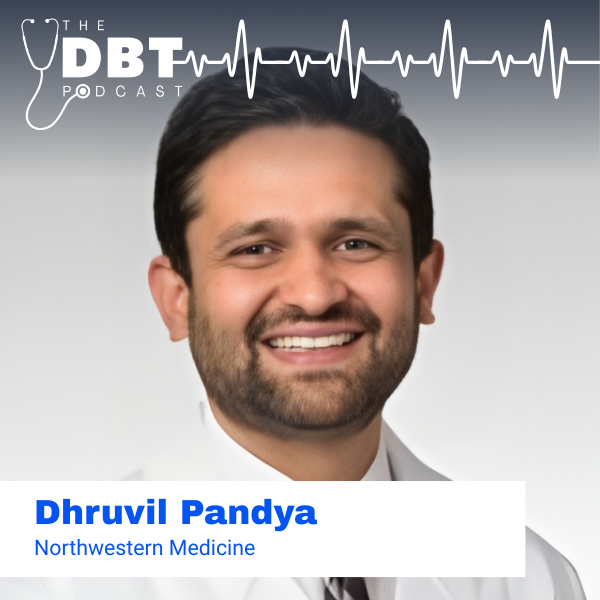
Meet our guest Dr. Dhruvil Pandya of Northwestern Medicine
Dr. Dhruvil Pandya is a vascular and interventional neurologist committed to advancing collaborative, patient-centered care for cerebrovascular disease. Board-certified in Internal Medicine, Neurology, Vascular Neurology, and Neurocritical Care, he brings a multidisciplinary perspective shaped by extensive training at the Medical College of Wisconsin and Ross University School of Medicine.
Dr. Pandya serves as the Medical Director of Stroke at Northwestern Medicine Delnor Hospital and is a Clinical Assistant Professor in the Ken and Ruth Davee Department of Neurology at Northwestern University Feinberg School of Medicine. His academic work includes leading stroke systems-of-care improvements, studying wellness in medicine, and developing innovative neurovascular delivery models. As Principal Investigator on multiple clinical and investigator-initiated trials, he works to bridge scientific discovery with real-world patient impact.
Beyond his clinical and academic roles, Dr. Pandya is the founder of SOOKH PLLC and Be360 Integrative Wellness and serves as an advisor to early-stage healthcare ventures. His work reflects a commitment to integrating clinical expertise, research, and entrepreneurship to elevate the future of neurovascular care and physician wellbeing.
Episode Summary
This episode of The DBT Podcast features Dr. Dhruvil Pandya of Northwestern Medicine, who breaks down the full spectrum of stroke prevention, detection, treatment, and recovery. He explains why stroke remains a leading cause of death and disability, and how up to 80% of cases can be prevented through proactive lifestyle choices and medical management. Dr. Pandya outlines early warning signs using the B-FAST mnemonic, highlights breakthroughs such as mobile stroke units and thrombectomy procedures, and walks through best practices for immediate response and long-term recovery. The discussion underscores the importance of blood pressure control, weight management, stress reduction, and timely emergency action in improving outcomes.
Episode Highlights
(1:05) What are the signs and symptoms of a stroke?
(2:09) What can be done to prevent/reduce the chances of a stroke?
(5:10) What can be done to reduce stress? And let’s talk a little basketball!
(9:40) What role does obesity play in strokes and what can be done to manage this?
(10:58) What are some of the things to watch for when using GLP1 drugs?
(12:55) How often should blood pressure be checked?
(13:57) How does someone know if they are having a stroke?
(16:05) Are there different types of strokes and what actually happens during a stroke?
(18:00) How much progress has been made in treating strokes in the last 15 years?
(20:15) What should you do immediately if you’re having a stroke? Do you drive yourself to the hospital or call 911?
(21:20) What happens in a mobile stroke unit?
(25:00) The doctors talk about taking aspirin – does it help?
(25:55) What is done for stroke recovery and future prevention?
(27:35) What are statins and when should they be taken?
(28:20) Final comments from Dr. Pandya…
The information shared in this podcast is for general informational purposes only and is not intended as medical advice. Always consult with a qualified healthcare provider for questions about your health. The views and opinions expressed by guests are their own and do not necessarily reflect those of the host or production team. Neither the host, the guests, nor Flint Rock LLC assume any liability for actions taken based on the content of this podcast.
